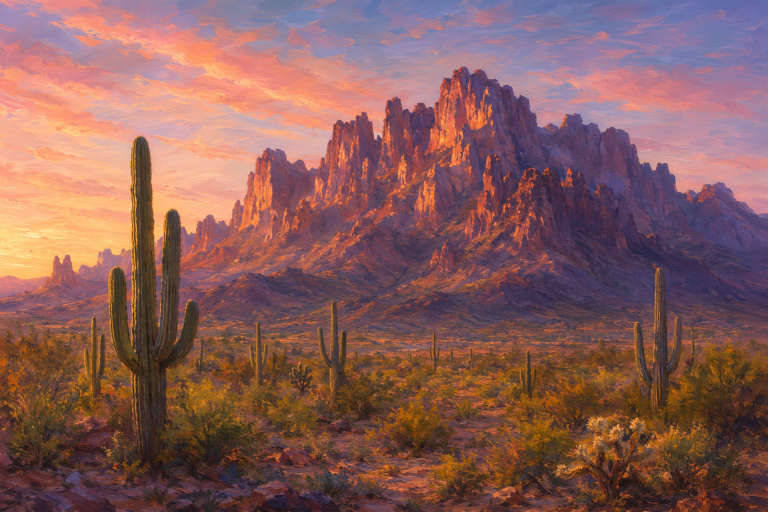
Strange Things in the Superstition Mountains
Not everything that happens in the Superstition Mountains involves gold or murder. Some of it is just plain strange. This is the part of the story I find most fascinating.
People have been reporting strange experiences in those mountains for well over a century. Unexplained lights moving through remote canyons. Disembodied voices and what some describe as Native American chanting coming from no identifiable direction. Hikers who feel watched from the moment they enter certain areas and cannot shake the feeling no matter how far they walk. Others report seeing old prospectors on the trail, dressed in clothing that belongs to another era, who simply vanishes in front of their eyes.
The Madman of the Superstitions
If the Superstition Mountains have ever had an official eccentric, it was Elisha Marcus Reavis.
Reavis was college educated. He had been a schoolteacher before he headed west during the California Gold Rush and came up empty. He made his way to Arizona in the 1860s and by 1872 had settled into a high mountain valley in the eastern Superstitions near Pinal. He farmed vegetables and hunted in complete isolation.
It was everything else about him that earned his reputation. He was an unkempt man who never shaved or cut his hair, and he seldom bathed. He was reportedly prone to running naked through the canyons firing a pistol into the sky. The Apache considered him insane and left him alone, which was probably the most effective safety strategy available to a lone white man living in those mountains.
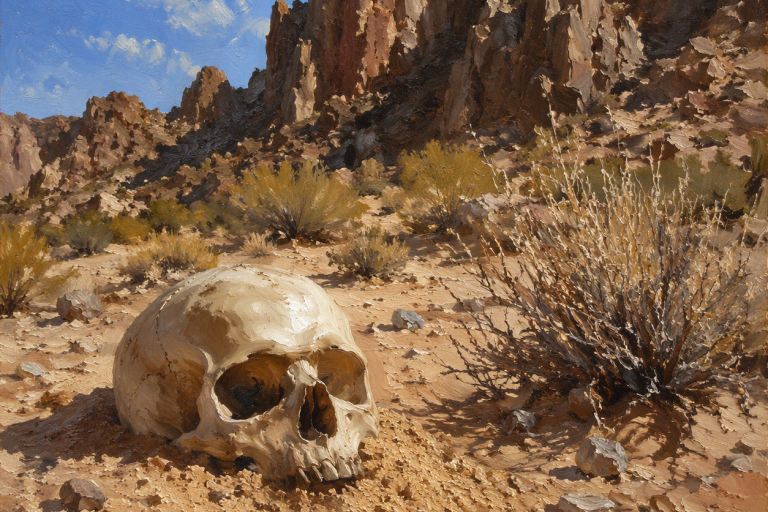
In the spring of 1896, a friend went to check on Reavis when he had not been seen for a while. He found him dead on a trail near Roger’s Canyon. Reavis was nearly 70 years old. His head had been severed from his body and was lying several feet away. No explanation was ever found for his death.
His grave is still out there. A crude pile of rocks marks the spot, just a few yards off a popular hiking trail.
Lights Over Weaver’s Needle
In May 1958, a man named Charles Marcoux spent a night alone near Weaver’s Needle in the Superstition Wilderness. What he reported afterward is difficult to explain and equally difficult to dismiss entirely.
At a certain point during his exploration he was stopped by what he described as a huge ring of light of varied colors that sparked. He said the force field held him in place and would not allow him to move in any direction except backward. So backward he went, all the way back to his camp.
Later that night a large orange ball of light came floating down the valley and disappeared into the mountainside. Marcoux said he photographed it. When the film was developed nothing showed up.
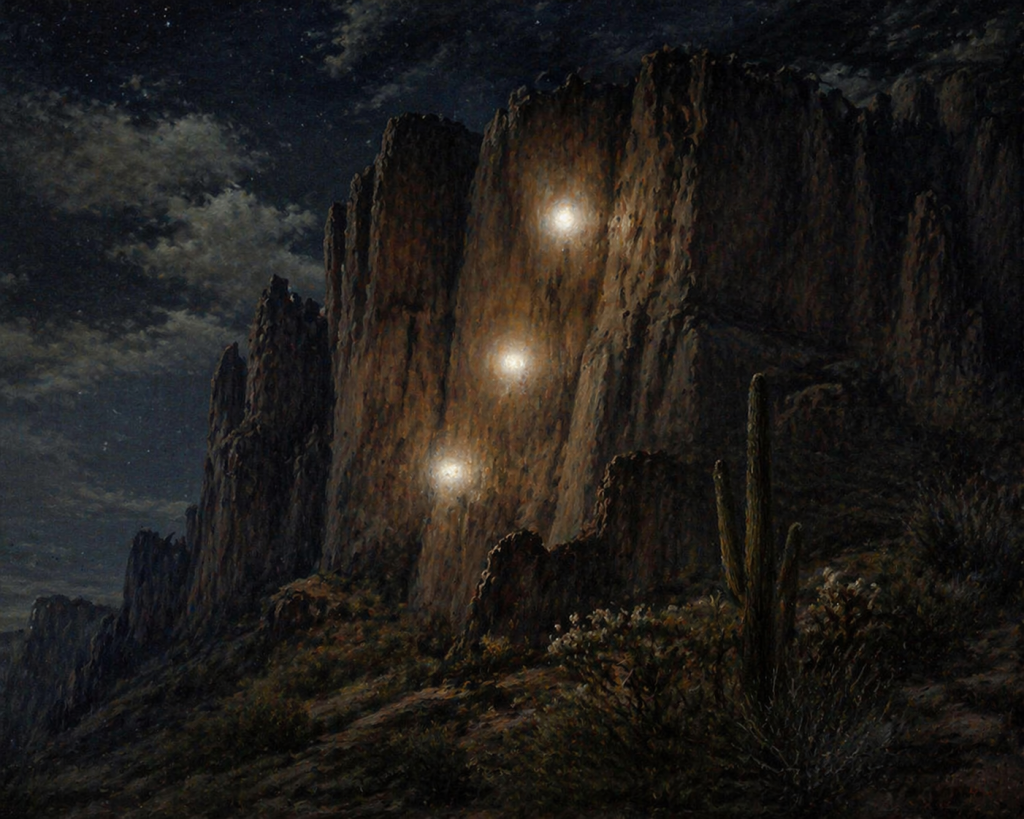
He returned to the area with his wife a few weeks later. This time they saw three white lights roughly the size of baseballs moving up and down the sheer face of a vertical cliff. The lights moved too rapidly to have been carried by human beings. When the lights turned and began moving toward them, they left.
On the way back to the highway their car engine died three times in the space of half a mile. His wife spotted what appeared to be blue telephone wires stretched across the road that disappeared when he got out to investigate. The car was covered in a silvery substance that resembled spider webs. He described it as odorless and tasteless, stretching considerably before it broke.
Marcoux was a believer in fringe theories about underground civilizations and his broader worldview should be taken with appropriate skepticism. But his account of what he saw near Weaver’s Needle was specific, detailed, and consistent every time he retold the story.
The Little People
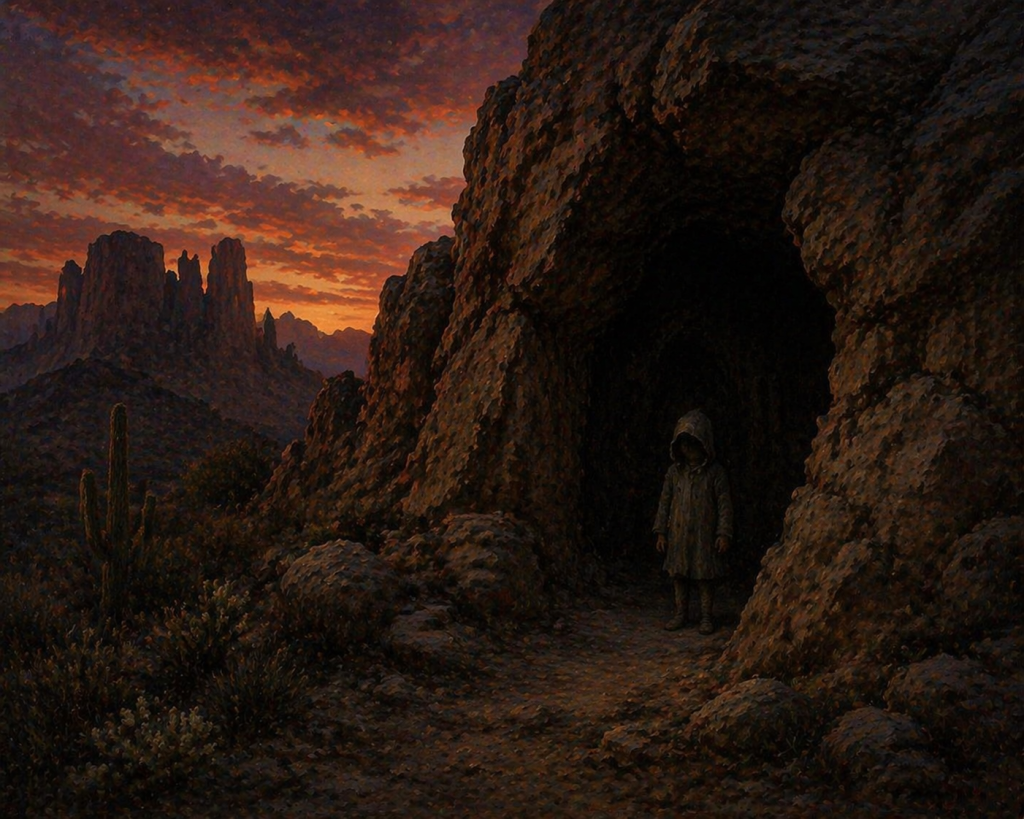
Steven Campbell, who works at the Superstition Mountain Museum and was interviewed for the YouTube channel The Paranormal Files, has spent years collecting accounts from people who have had unexplained experiences. One story he tells involves a Bureau of Land Management officer on horseback who spotted what he thought was a naked child alone in the mountains. He dismounted to investigate. When the figure turned around, it did not have the face of a child. He described wrinkled features, jagged teeth, and what appeared to be a small spear. The officer’s horse, which had been calm all day, became uncontrollable.
When the officer reported the encounter at his office, Native American police officers who overheard the conversation pulled him aside. They told him not to pursue it and not to go back. They said these things have been known to abduct children. They had been warned about them since childhood.
Campbell is careful to note he is passing along what he has been told, not making claims of his own. But he says accounts like this one come from credible people who had no reason to make them up. Whether you believe it or not, the Superstition Mountains have been generating stories like this one for as long as anyone has been keeping records.
The Campsite Nobody Claimed
In April 1958, a deserted campsite was discovered on the northern edge of the Superstition Mountains. What was found there has never been explained.
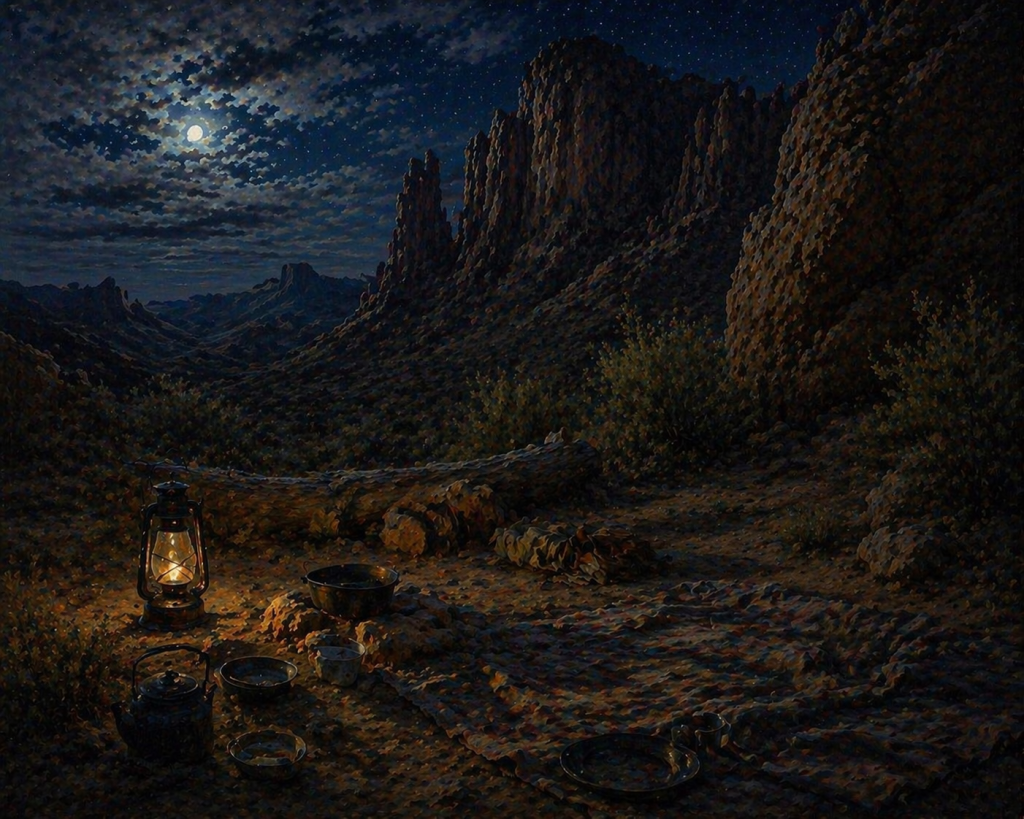
At the site were a bloodstained blanket, a Geiger counter, a gun cleaning kit with no gun, cooking utensils, and several letters. The names and addresses on every letter had been torn out. No trace of whoever had been camping there was ever found. Nobody ever came forward to claim the site or explain what had happened.
That is the entire record. A bloodstained blanket, a Geiger counter, and letters with the identities carefully removed. Make of it what you will.
Goldfield Ghost Town
At the base of the Superstition Mountains, just off the Apache Trail near Apache Junction, sits the old mining town of Goldfield. Gold was discovered there in the 1890s and the town boomed briefly before the ore played out and the place was abandoned. By the early 1900s Goldfield was a ghost town.
I have been to Goldfield a couple of times. It is genuinely worth a visit. The buildings look like an authentic frontier town, which is because most of them are. People dressed in period clothing walk the streets. There is a working narrow-gauge railroad, a mine tour, and enough atmosphere to make you forget for a few minutes that you are standing at the edge of one of the most troubled mountain ranges in America.
By 1942 the abandoned Goldfield mine was already being used as a film location. Universal Pictures shot a movie there called Sheltered Woman, starring Irene Dunne and Ralph Bellamy, using the naturally dramatic terrain and the ruined structures as a ready-made set. The area was already pitted with dangerous shafts by then and Universal had to keep the public away during filming.
Goldfield has its own haunted reputation today separate from the mountains behind it. Given its location at the foot of the Superstitions, that probably should not surprise anyone.
The Children of Flatiron
On the eve of Thanksgiving in 2011, a small plane carrying six people crashed into the Superstition Mountains just six minutes after takeoff from a Mesa airport. Three of the passengers were children, ages six, eight, and nine. No bodies were ever recovered from the wreckage. The mountain became their gravesite.
Their mother has hiked to the crash site every year since. A memorial bench sits on the property of the Superstition Mountain Museum at the base of the mountains, engraved with the children’s names. A small teddy bear belonging to the youngest girl rests beside it.
Staff at the museum say the area around the memorial is one of the most active spots on the property. Women visitors in particular report becoming suddenly emotional near the bench. Some describe feeling small hands reaching for theirs. Whether that means anything is something each visitor decides for themselves.
The mother remarried and continues to come back. She brings ghost hunting equipment now. She says she leaves every visit in tears, but happy. She believes her children are still there.
The Mountains Keep Their Secrets
Strange lights, a headless hermit, a campsite that nobody claimed, a ghost town at the foot of it all. The Superstition Mountains have been generating unexplained stories since before anyone was writing them down.
Most of what gets reported out there has a rational explanation somewhere. Heat and altitude do interesting things to the human mind. Isolation amplifies sounds and creates shadows. The terrain itself is disorienting in ways that experienced hikers find unsettling.
But not everything has been explained. The mountains are large and remote enough that some of it probably never will be. Could it be ghosts? UFOs? Maybe both, or something else entirely. That is either comforting or it is not.
Debbie Campbell Fowler is the author of Waco Hauntings: and Other Tales from the Heart of Texas and co-founder of Atomic Clockwork Publishing.
Illustrative images in this post are AI-generated.
Sources
Marcoux, Charles A. “Underground Exploration in Arizona.” Round Robin, circa 1958. Border Science Research Associates.
Arizona Republic, January 26, 1942. “Pioneer Goldfield Camp Re-Created.”
Legends of America. “The Lost Dutchman Mine, Arizona.” Updated November 2025.
Kollenborn, Tom. “Superstition Mountain.” Apache Junction Public Library Local History Collection, 2001.
Campbell, Steven. Interview. “Superstition Mountains: The Scariest Place in America.” The Paranormal Files, YouTube. Published 2024.