The Superstition Mountains: What’s in a Name
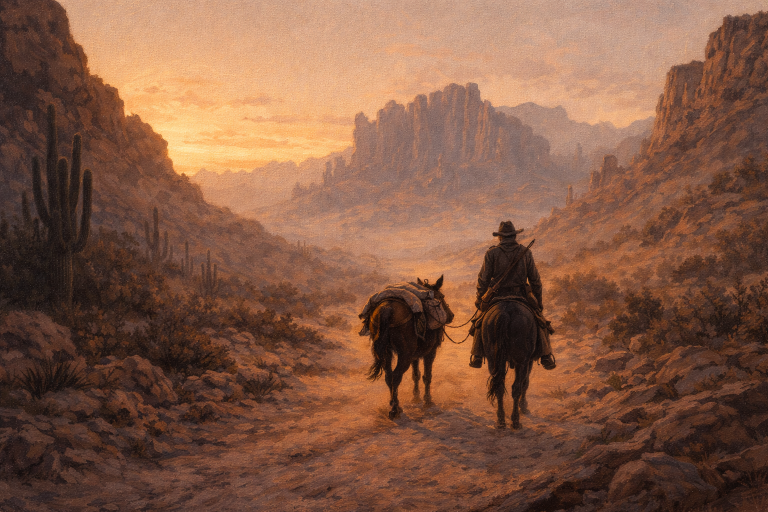
In the mid-1700s, according to accounts passed down through the years, a group of Jesuit missionaries led 240 gold-laden mules across southern Arizona. The group disappeared into a rugged mountain range east of what is now Phoenix. When they re-emerged, the animals carried nothing. What happened to the gold, and what happened to the men? That has never been fully explained.
It was not the first strange story to come out of those mountains and it would not be the last.
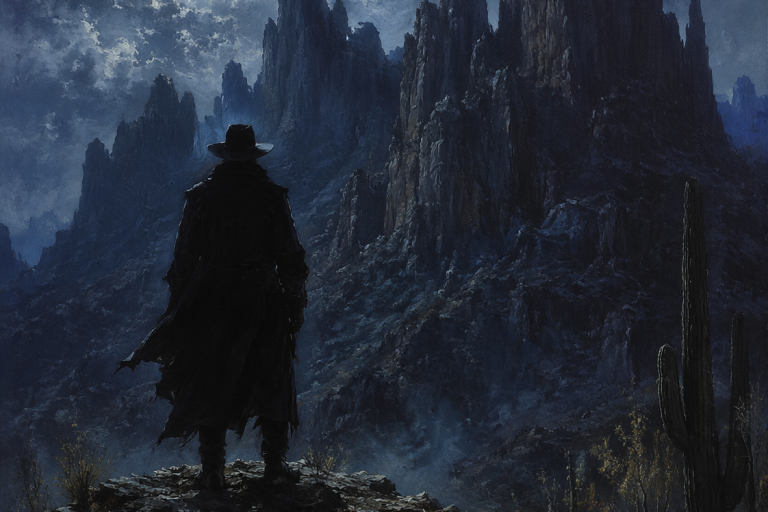
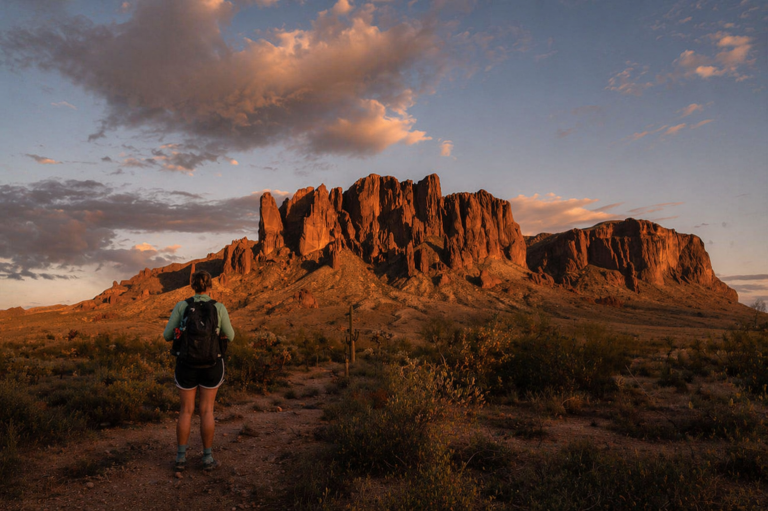
The Superstition Mountains sit about 40 miles east of Phoenix, near Apache Junction, Arizona. Superstition Mountain itself rises roughly 3,000 feet above the surrounding desert floor and dominates the eastern fringe of the Salt River Valley. The range stretches about 24 miles east to west and covers nearly 160,000 acres of the Tonto National Forest. It is, by most accounts, Arizona’s second most painted and photographed landmark after the Grand Canyon. Artists have been coming to paint its western face since 1870.
It is also one of the most written about, argued over, and obsessed upon pieces of land in the American West. But before getting into any of that, there is something worth clearing up.
The Name
Most people assume the name Superstition is ancient. Some assume it is Native American in origin. Others have read that the Spanish named it Sierra de Espuma, meaning mountain of foam. None of those assumptions hold up when you dig into the actual record.
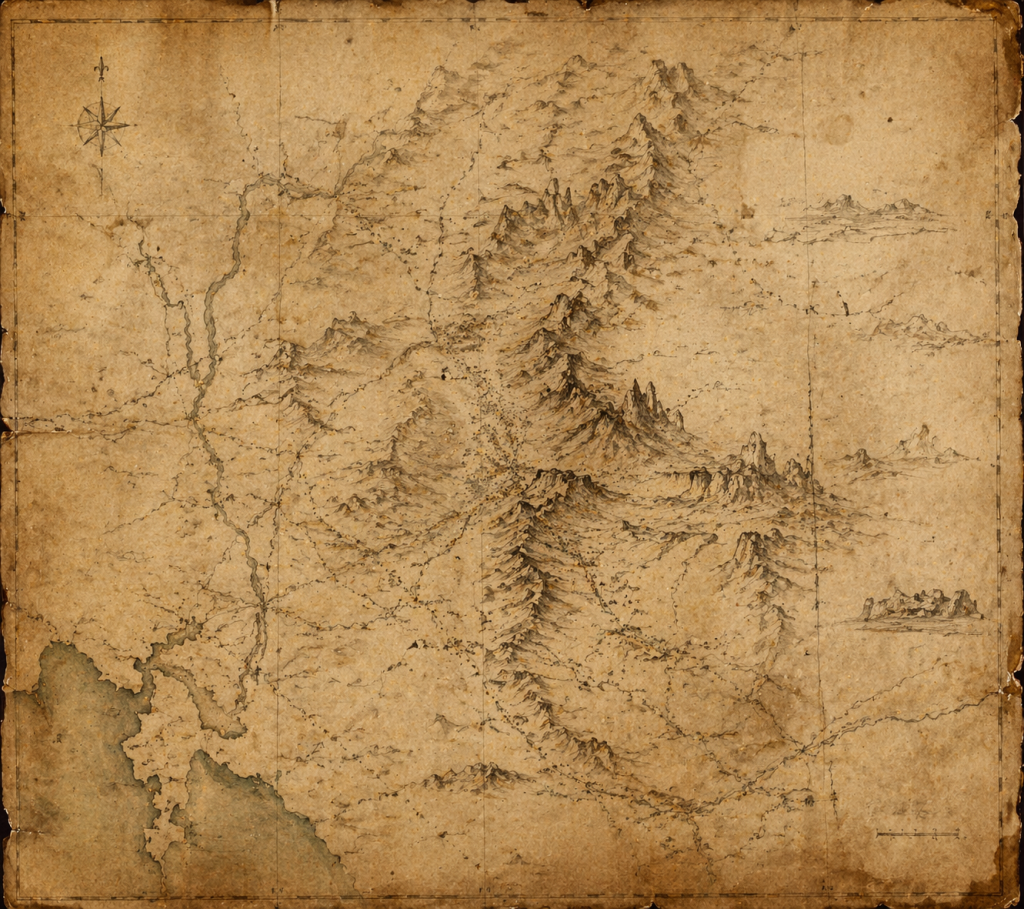
The documented origin is considerably more ordinary. In the late 1860s, Salt River Valley farmers who grew and cut hay for the U.S. Army at Fort McDowell were constantly hearing stories from the Pima people about how much they feared those mountains. The farmers translated that fear as superstitious, and the name stuck. Superstition Mountain appeared on U.S. War Department maps for the first time in 1870.
The Sierra de Espuma story traces back to a 1918 forest service map drawn by a man named L.P. Landon, who used that name for a small butte southwest of the main mountain. It was never the name for the full range. Superstition Mountains historian Tom Kollenborn has pointed this out, and it is worth knowing because the Spanish naming story gets repeated constantly as though it were established history.
It is not.
Born of Fire
The mountains themselves are far older than any name humans have given them. They were formed by volcanic upheaval 17 to 29 million years ago during the Tertiary Period. A massive tectonic event created a caldera almost seven miles in diameter. After the lava cooled, magma pushed the center of the caldera upward, forming a mass of igneous rock. Millions of years of wind and running water eroded that mass into the jagged spires and deep canyons visible today. The mountain was once a thousand feet higher than it currently stands.
Old timers in the region have a saying about the desert that surrounds it. Everything that survives out here either sticks, stings, bites, or eats meat. The Superstitions fit that description. Temperatures exceed 119 degrees Fahrenheit in summer and drop below freezing in winter. Snow is not unusual at the higher elevations and the terrain is unforgiving in every direction.
Who Actually Lived Here
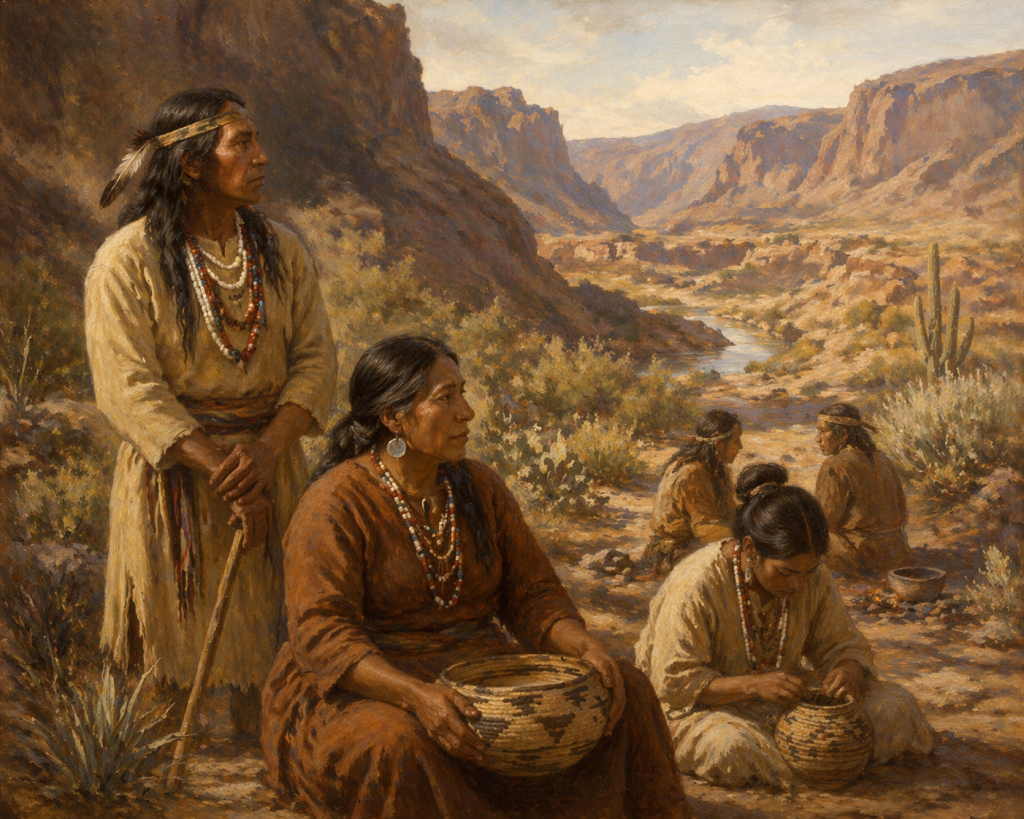
The people who actually lived in that region were the Kewevikopaya Yavapai, one of four subdivisions of the Yavapai tribe. They were the primary residents of the area prior to the early 1870s. The entire Yavapai population, across all four subdivisions, never exceeded about 1,500 people even before Anglo settlement arrived.
Between 1870 and 1873, the Yavapai endured a series of devastating defeats. The most significant came on December 28, 1872, at a place now known as Skeleton Cave, along the Salt River Canyon. A force of roughly 250 U.S. Army soldiers, including three companies of cavalry and Pima and Apache scouts, surrounded a group of Yavapai sheltering inside. When the Yavapai refused to surrender, the soldiers opened fire from the cave entrance and dropped boulders from above. Close to 100 adults and children were killed.
By April 1873, the surviving Yavapai had surrendered and been moved to a reservation. The mountains they had called home for generations were left behind.
The Yavapai and Apache cultures were similar enough that outsiders frequently confused the two. That confusion is almost certainly where the persistent association between the Apaches and the Superstitions comes from. By the time prospectors began arriving in significant numbers, the Yavapai were gone. The Apache association filled the story void they left behind.
In 1925, the Fort McDowell Yavapai retrieved the bones of their relatives and brought them home for burial in a mass grave on the reservation. A tombstone was dedicated over that grave in 1985.
What Came Next
Within a few years of the Yavapai removal, the stories started. It was all about gold and a lost mine. It was centered around a dying German who knew where it was. It was all about unexplained deaths and a legend that made this place one of the most talked about mysteries in Arizona.
The mountains themselves were born of volcanic fire millions of years ago and the name came from those who were afraid of what was in the mountains. The people who actually called them home were driven out in 1873. Almost immediately after that, the obsession began.
The stories that come from the Superstitions are weird, fascinating, and downright spooky. The next story in the series is Jacob Waltz and the elusive Lost Dutchman Mine.
Debbie Campbell Fowler is the author of Waco Hauntings: and Other Tales from the Heart of Texas and co-founder of Atomic Clockwork Publishing.
Illustrative images in this post are AI-generated.
Sources
Kollenborn, Tom. “Superstition Mountain.” Apache Junction Public Library Local History Collection, 2001.
Arizona Daily Star, March 28, 1999. “Perpetual Mystique.”
Zinn Education Project. “Skeleton Cave Massacre, December 28, 1872.”
“Skeleton Cave, AZ”. Hike Arizona. Retrieved December 28, 2019.