Dead in the Superstition Mountains
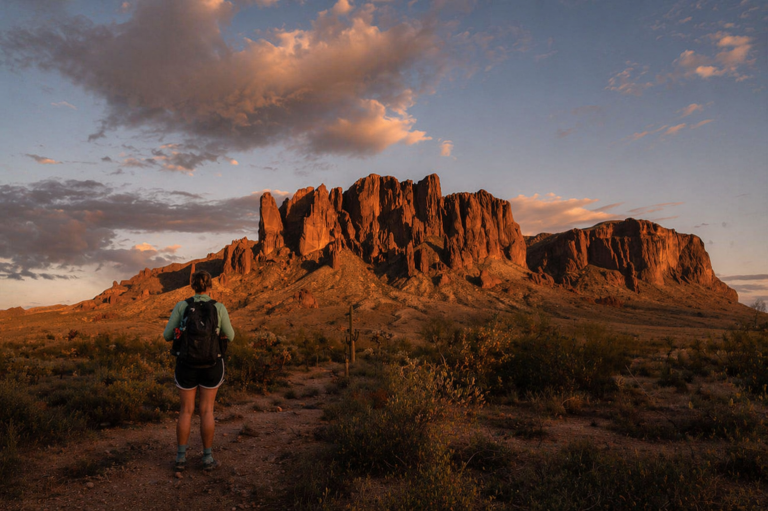
Jagged volcanic rock, deep canyons, saguaro cactus standing guard on the ridgelines. People come from all over the world to hike the Superstition Mountains east of Phoenix, Arizona.
Some don’t come back.
Since the late 1800s, dozens of people have died in the Superstitions under circumstances that law enforcement in Pinal and Maricopa counties has never been able to fully explain. The causes range from heat exhaustion and falls to gunshot wounds. What stands out, if you start reading through the old newspaper accounts, is how many of the victims were found with their skulls separated from their bodies. And how many cases were never solved.
Not one person has ever been brought to trial for murder in the Superstition Mountains.
The Man with the Maps
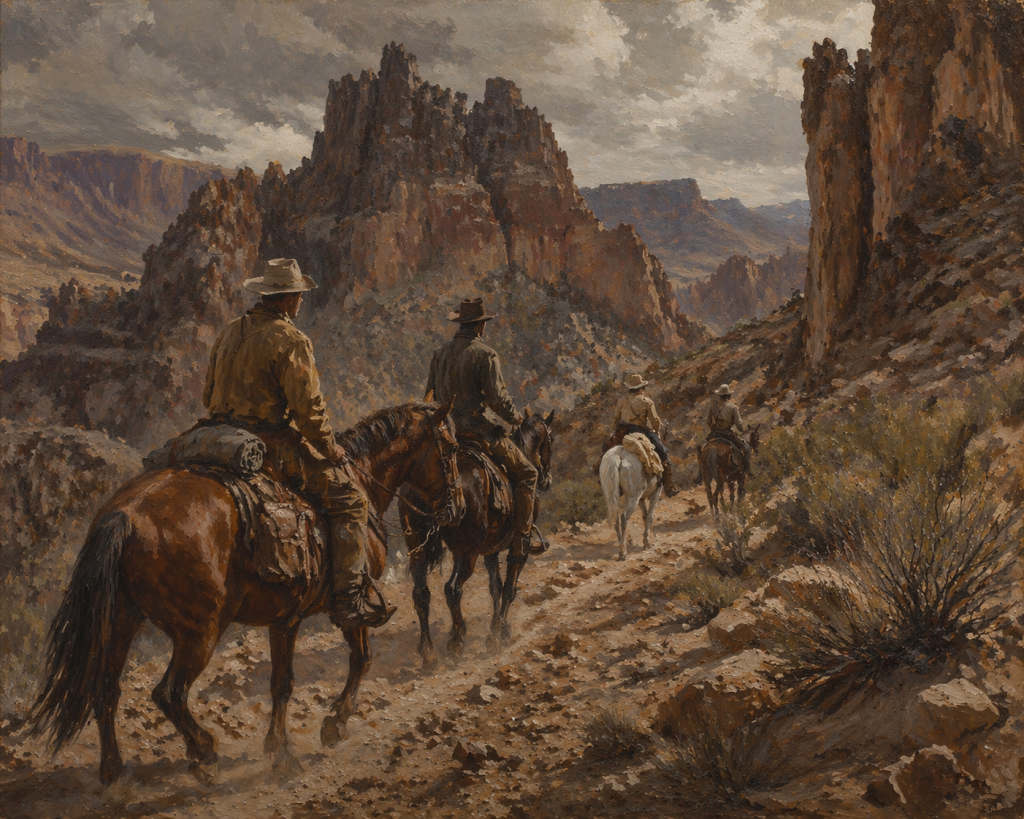
Adolph Ruth was 66 years old in the summer of 1931. He worked for the U.S. Department of Agriculture and walked with a limp from a previous gold-hunting accident that had fractured his thighbone so badly it shortened his leg permanently. By most accounts, he was not the kind of man you would picture heading alone into one of the most rugged wilderness areas in Arizona.
But Ruth had been obsessed with the Lost Dutchman Mine for nearly two decades. His son Edwin had acquired maps in Mexico that Ruth believed showed the location of Jacob Waltz’s legendary mine in the Superstitions. He had studied those maps against historical accounts for years. By 1931, he was convinced he knew where to look.
His wife and two sons begged him not to go. He told them he only wanted to sit on warm rocks and bake the rheumatism out of his bones.
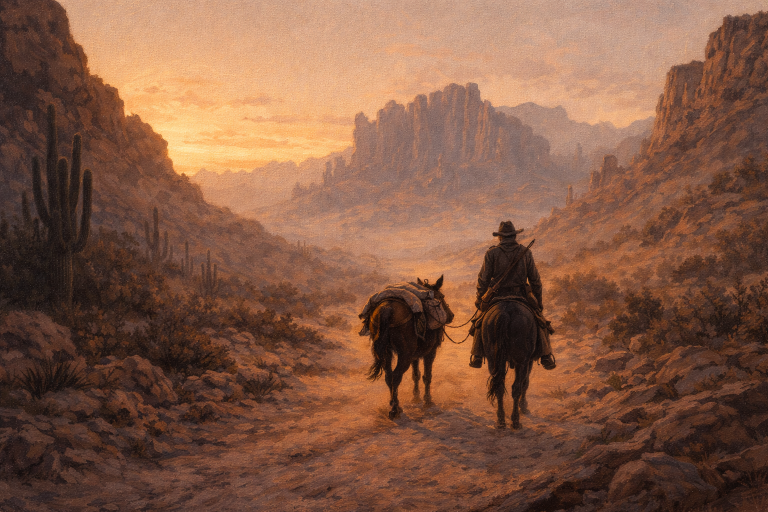
He arrived in Arizona on May 13, 1931. He stayed at the Quarter Circle U Ranch at the base of the mountains, owned by cattleman W.A. “Tex” Barkley. Two men, L.F. Purnall and Jack Keenan, packed his supplies in and left him at his camp near Weaver’s Needle on June 14. The following day, June 15, Ruth made the last entry in his diary.
After that, nothing. Not even his footprints were found beyond that point.
When Ruth failed to return, his son Dr. Erwin C. Ruth, a former U.S. Treasury Department investigator, came from Washington to lead the search. He told Deputy Sheriff Jeff Adams of Maricopa County that when he had last seen his father in Washington, the elder Ruth had confided he had decided not to carry his original map into the mountains. He feared someone would come after him if it became known the map was on his person. Dr. Ruth believed his father had changed his mind and taken the map anyway. Deputy Sheriff Adams told reporters he was inclined to agree with the son’s theory that the father had been murdered.
The searches turned up nothing through the summer and fall of 1931.
Then, some months after Ruth disappeared, campers found a bottle floating down the Salt River. Inside was a note. It read: “I’m sitting under a tree in a creek with leg broke. I’ve got to have help quick. Finder of this note please give to Howard Peterson.” And then a postscript. “P.S. Have found the lost Dutchman.”
The man who found the bottle tossed it back into the river without thinking twice. By the time anyone connected it to the missing prospector, two months had passed.
A new search was organized but they found nothing.
The Arizona Republic sponsored another attempt in December 1932. Five days in, a tracker’s hunting dogs found a skull lying under a tree. There were two bullet holes in it. The Smithsonian Institution’s physical anthropologist, Dr. Ales Hrdlicka, examined the skull and concluded there was a strong possibility Ruth had been shot with a high-powered gun, possibly a .44 or .45-caliber Army revolver.
A month later, additional remains and some of Ruth’s personal effects were found about three-quarters of a mile away. Among them was a checkbook containing a note claiming he had located the mine, with directions, and the words “Veni, vidi, vici.” Latin for “I came, I saw, I conquered.”
Nobody was ever charged for Ruth’s murder. The case is still considered unsolved today.
A Pattern with No Explanation
Ruth’s case would have been remarkable on its own. But it was not an isolated incident.
In July 1947, a retired commercial photographer named James Cravey hired a helicopter to drop him and two weeks of supplies into a sandbar in LaBarge Canyon. He had sworn the pilot to secrecy, but the story made the news before he went in. He paid anyway and headed into the mountains alone.
When the pilot returned on August 2nd as arranged, Cravey’s food supply sat untouched. He had never come back to it. A search party led by Barney Bernard, a local rancher who had been tracking deaths in the Superstitions for years, followed Cravey’s trail with bloodhounds for about three hours. The dogs lost the scent. There was nothing else to find.
On February 21, 1948, two hikers discovered the body. It was rolled up in a blanket with a rope tied around it and left under a rock outcrop. His hat, shirt, and jacket were piled nearby with a small rock holding them down. His wallet and identification were still in his pockets. Like Adolph Ruth before him, James Cravey had been shot twice. And like Ruth, he had been decapitated.
The Tucson newspaper that had covered the story called it the twentieth known death connected to the search for the Lost Dutchman Mine.
It was not the last.
Bernardo Flores, a 55-year-old prospector from Coolidge, went into the mountains sometime later. His skeleton was found headless.
In April 1955, a party of four young hunters entered the range. During the day, one of the boys became separated from the others, who assumed he had gone in a different direction to search for pigs. The next day his body was found roughly five miles from where he was last seen, at the base of a cliff. He had apparently been shoved. There was a bullet hole between his eyes.
On October 23, 1960, hikers from Phoenix found another headless skeleton in the mountains. The remains were later identified as those of Franz Harrier, an Australian exchange student who had been reported missing for some time.
On March 21, 1961, the body of Walter J. Mowry of Denver, Colorado was recovered near Weaver’s Needle. A coroner’s jury ruled his death had been caused by a gunshot wound inflicted by a person or persons unknown.
That same year, the fully-clothed skeleton of Charles Bohen, a Salt Lake City man, was found in the mountains. He had also been shot.
In June 1961, a man named Jay Clapp, described by neighbors as a peaceful recluse who lived in a cave in the Superstitions and always wore a necktie when he came to town, disappeared. His headless skeleton was found three years later. The cause of death is still listed as unknown.
Martin Zywotho came from Brooklyn, New York. He was found with a bullet hole in his head. Joseph Kelly came from Dayton, Ohio. His skeleton turned up near Weaver’s Needle, shot between the eyes. A man known as Doc Burns came from Oregon specifically to search for the Lost Dutchman Mine. He was found dead of a gunshot wound. Charles Harshbarger and Ron Bley went into the mountains together. As far as anyone knows, neither one ever came back out.
Those are the cases with names and dates that can be traced through newspaper records. Others appear in historical accounts of the mountains but are harder to pin down. An old prospector named Guy Frink was reportedly found shot on a trail in La Barge Canyon in 1937, a small sack of gold ore sitting next to his body. A physician from Oregon named Dr. John Burns was reportedly found shot to death in 1951, his death ruled accidental despite no powder residue found on the body. Whether those accounts are fully accurate is difficult to confirm, but they appear consistently enough across multiple sources that they are worth noting.
The Men Who Stayed
Not everyone who went into the Superstitions died. But the ones who kept going back year after year have their own kind of story.
Bob Ward spent 25 years in the mountains. During that time, all of his best friends were killed. In 15 years of searching for Spanish treasure, he found nothing. He told a reporter in 1983 that someone had once ambushed him and two companions in the mountains. A bullet hit a rock near his head, ricocheted, struck him in the neck, and broke it in two pieces. He and his friends escaped.
He said he planned to keep looking.
What the Records Say
Historian and longtime Superstition Mountains researcher Tom Kollenborn estimated that roughly 75 people had been killed in the mountains since the turn of the century, from accidents and gunshot wounds. Writer Robert Sikorsky, in a 1984 piece for the Arizona Republic drawn from his book Fools’ Gold, noted that the puzzle of who was responsible had baffled law enforcement in Pinal and Maricopa counties for years.
“An aura of mystery surrounded the circumstances of the murder of a 62-year-old man,” Sikorsky wrote of the Cravey case, “one of the many who had died trying to find the Lost Dutchman Mine.”
What draws people in is not hard to understand. The legend of the mine is genuinely compelling and the mountains are beautiful. What happens to some of them once they get there is harder to explain. The terrain is brutal. Heat, dehydration, and falls account for some deaths. But the bullet holes, the separated skulls, the bodies moved and arranged after death, those details have never been explained away.
One thing stands out across all of these cases. A lot of these people were shot in the head. Not lost and never found. Not fallen from a cliff. They were shot. That means either someone in those mountains does not appreciate company, or someone else was out there looking for the same thing and was willing to do whatever it took to find it first. Either way, the pattern is hard to ignore.
The mountains are beautiful and draw hikers to it every year, but they also hold secrets. No one has ever been convicted of the crimes that happened there and the mountains have not offered any answers. I admit to having a fascination with them, but I can’t bring myself to actually go hiking there. The truth is, too many things have happened in those mountains that are hard to explain. People have died, and not always by accident. That’s enough to keep me out.
Even with the stories of people going missing, the search for the mine has never stopped.
The next story in the series is The Black Legion of the Superstition Mountains.
Debbie Campbell Fowler is the author of Waco Hauntings: and Other Tales from the Heart of Texas and co-founder of Atomic Clockwork Publishing.
Illustrative images in this post are AI-generated.
Sources
Arizona Republic, January 8, 1984. “Murder in the Superstitions.” Robert Sikorsky. From the book Fools’ Gold, Golden West Publishers.
Arizona Republic, multiple dates 1931-1983. Articles covering deaths and disappearances in the Superstition Mountains.
Tucson Citizen, multiple dates 1931. Wire reports covering the Adolph Ruth search.
Kollenborn, Tom. “Superstition Mountain.” Apache Junction Public Library Local History Collection, 2001.